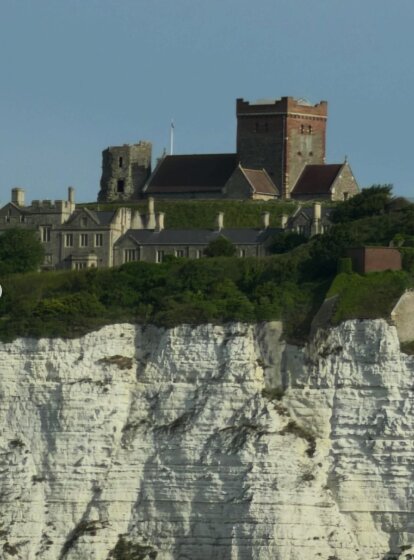
Dover Castle's list of royal visitors reads like a condensed history of England. For 900 years, every monarch who needed to impress a foreign dignitary, launch a military campaign, or control the most strategic point in the kingdom came to this clifftop fortress. These are the figures who shaped Dover Castle — and the rooms that still carry their imprint.
Henry II: The Builder King (1154–1189)
No single figure did more to create Dover Castle as it stands today. When Henry II came to the throne in 1154, Dover was a functional but undistinguished fortress. When he died in 1189, it was the most sophisticated royal residence in northern Europe.
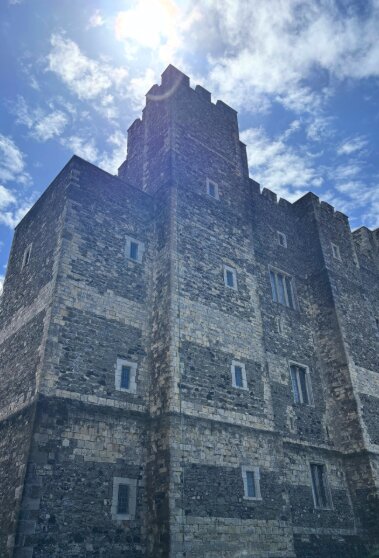
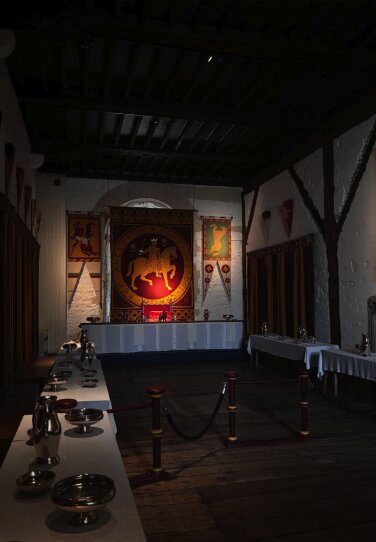
Between 1181 and 1188, Henry spent over £6,000 — several years of royal income — constructing the Great Tower. He built it as a dual-purpose structure: an impregnable keep and a palace worthy of receiving foreign kings. It had grand state apartments, a great hall, two chapels, and a reliable water supply via an internal well shaft so the garrison could hold out indefinitely during a siege.
In 1183, Henry received Philip, Count of Flanders, here. The visit was designed to demonstrate English royal power. Today, hologram recreations of Henry and his court bring this world to life in the restored Great Tower rooms — though the holograms are considerably better behaved than the real Henry, who was notorious for his violent rages.
Henry II's conflict with Archbishop Thomas Becket is one of the great dramatic stories of medieval England. Henry used Dover Castle as a staging point for diplomatic meetings throughout the years of their bitter dispute. Becket was murdered in Canterbury Cathedral in 1170 — just 15 miles from Dover. Henry later did public penance at Becket's tomb.
Richard I and King John
Richard I (the Lionheart) passed through Dover Castle multiple times on his way to and from the Crusades, though he showed little interest in England itself — famously spending fewer than six months of his ten-year reign in the country. Dover was a transit point, not a residence.
King John invested heavily in the outer curtain walls — the large ring of D-shaped towers that still enclose the site — recognising that existing defences needed strengthening. The Magna Carta that he was forced to sign in 1215 directly triggered the crisis that brought Dover Castle to its greatest military test.
Hubert de Burgh: The Constable Who Held the Castle (1216–17)
Not a king, but the man who saved England from French rule. Hubert de Burgh, Constable of Dover Castle, held the fortress against a prolonged French siege while the nine-year-old Henry III clung to his new throne.
French Prince Louis had been invited by rebellious English barons to take the crown. He landed in England and besieged Dover Castle with a substantial army. The French tunnelled beneath the north gate and collapsed part of it; Hubert's garrison retreated, blocked the breach, and held on for three months. By August 1217, Louis had been defeated at the Battle of Lincoln and the naval Battle of Sandwich, and the siege was lifted.
The redesigned north gate, built after the siege to prevent the same tunnelling attack, is still visible in the castle's architecture today. A section of the medieval countermining tunnel is accessible as part of the Dover Castle Under Siege exhibition.
The Dover Castle Under Siege exhibition tells the story of the 1216 siege through immersive interactive displays, including the reopened section of the original medieval tunnel. It's included in standard Dover Castle admission and is one of the best recent additions to the site.
Henry VIII: Impressing the Emperor (1520)
Henry VIII used Dover Castle as the reception point for Holy Roman Emperor Charles V in 1520. The castle was extensively updated and decorated for the occasion — Henry understood the diplomatic importance of setting, and Dover's clifftop position above the Channel approach to England made a powerful statement about English strength.
That same year, Henry met Francis I of France at the Field of the Cloth of Gold near Calais — the most spectacular diplomatic summit of the era. Dover Castle provided the English logistical base for both events.
Walmer Castle, just 7 miles along the coast from Dover, was built by Henry VIII as part of his coastal artillery chain. It later became the official residence of the Lord Warden of the Cinque Ports — a title held by the Duke of Wellington and Winston Churchill. It makes a compelling half-day complement to a Dover Castle visit.
Vice-Admiral Bertram Ramsay: The Commander of Dunkirk (1940)
Not a monarch, but the most consequential figure ever to inhabit Dover Castle. Vice-Admiral Bertram Ramsay established his headquarters in the Napoleonic-era cliff tunnels in 1939 and from there directed the most extraordinary military rescue in history.
Between 26 May and 4 June 1940, working for nine days almost without sleep in a tunnel cut into the White Cliffs, Ramsay coordinated the evacuation of 338,226 British and Allied troops from the beaches at Dunkirk using 850 vessels ranging from Royal Navy destroyers to Thames pleasure boats. He watched the operation through a window cut directly into the cliff face. Churchill called it "a miracle of deliverance."
Ramsay's Operations Room in the Casemate tunnel level is preserved as it appeared in 1940, complete with period communications equipment. Walking through it is one of the most powerful experiences at any English Heritage site — and it is the centrepiece of the Secret Wartime Tunnels tour included in standard Dover Castle admission.
Visit the Rooms Where History Happened
You can stand in Henry II's great hall, walk the outer walls that John built and Hubert de Burgh defended, and descend into the tunnels where Ramsay changed the course of the Second World War — all in a single day at Dover Castle. For opening hours and tickets, see our Visitor Information page, and for the full historical background, read our History of Dover Castle.