The honest answer: yes, for most visitors, Dover Castle is absolutely worth visiting — but with a clear-eyed understanding of what makes it special and what to watch out for. This is the assessment that the English Heritage website won't give you, and that most travel articles are too polite to write.
What Makes Dover Castle Genuinely Special
The Secret Wartime Tunnels Are Extraordinary
The centrepiece of any Dover Castle visit is the Secret Wartime Tunnels, and they deserve their reputation. You descend into the chalk beneath the cliffs and walk through the actual Operations Room where Vice-Admiral Ramsay directed Operation Dynamo — the evacuation of 338,226 Allied troops from the beaches at Dunkirk in nine days in May–June 1940. The communications equipment is still in place. The window through which Ramsay watched the evacuation still looks out over the harbour. The immersive dramatisation of the rescue operation — projected onto the tunnel walls, with sound design that places you in the room as it happened — is as well-executed as anything at a major heritage attraction in the country.
Nothing else in England puts you this physically close to a pivotal moment in modern history. This is not a reconstruction — it is the actual room.
The Great Tower Is One of the Best Medieval Experiences in England
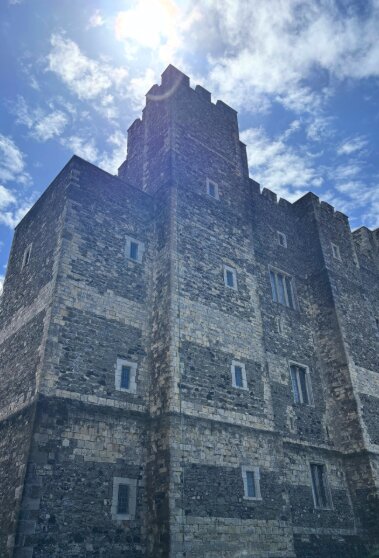
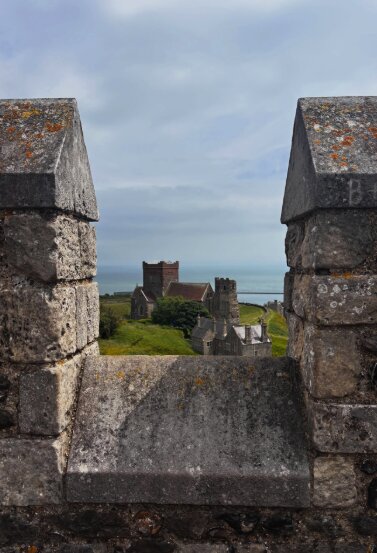
Henry II's Great Tower has been restored with a level of colour and ambition that surprises most visitors expecting grey stone. The hologram figures of the king and his courtiers in the great hall, the recreated medieval kitchen, the chapel with its vivid painted surfaces, and the roof with a panoramic view across the Channel to France — the whole experience communicates what a 12th-century royal palace actually felt and looked like, rather than asking you to imagine it from empty rooms.
For a comparison: if you've visited the Tower of London and felt that the rooms lacked context, the Dover Castle Great Tower solves exactly that problem.
The Site Spans 2,000 Years in One Visit
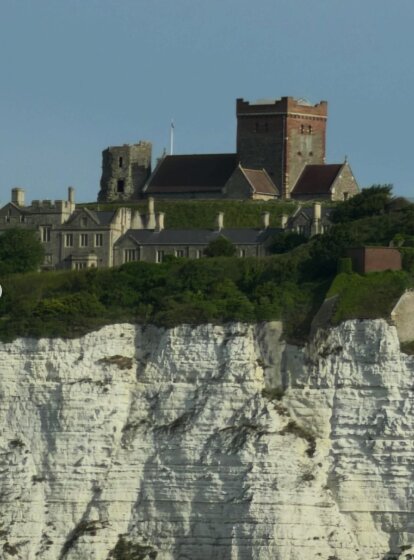
Roman lighthouse. Saxon church. Norman keep. Napoleonic tunnels. Second World War command centre. Cold War bunker. In almost any other country, each of these layers would be a separate attraction. At Dover Castle, they are all within a 15-minute walk of each other, included in a single admission ticket. The density of significant history per acre is exceptional.
The Roman Pharos inside the castle grounds — built c. AD 50 — is one of the tallest surviving Roman structures in Britain. It still stands 40 feet tall in its original materials: Roman brick, imported tufa, and pink Roman cement. Few visitors realise they're looking at a 2,000-year-old building that was already ancient when Henry II arrived.
Honest Criticisms
The Site Is Large and Physically Demanding
Dover Castle covers 34 acres on a hilltop. There is a lot of walking, much of it uphill or over uneven historic surfaces. Visitors with mobility limitations will find the Secret Wartime Tunnels and some exterior areas difficult or inaccessible. The castle has done what it can — lifts in the Great Tower, five accessible toilets including a Changing Places facility — but the inherent nature of a hilltop medieval fortress means some limitations cannot be designed away. If you're visiting with elderly relatives or anyone with significant mobility issues, contact English Heritage in advance to discuss what will and won't be accessible.
Peak Season Queues Are Real
In July and August, particularly on Saturdays, the Secret Wartime Tunnels tour fills up quickly. If you arrive at 11am hoping to join the next tour, you may wait 45 minutes. The solution is simple: arrive at 10am when the castle opens, and go straight to the tunnels first. But if you arrive mid-morning in August without a plan, your tunnel experience may be compromised.
The Admission Price Reflects What It Is
At adult from £23.60 off-peak (and higher in summer), Dover Castle is not cheap for a day out. Some visitors feel it is slightly expensive. The counter-argument: the tunnels alone justify a significant admission price, and the breadth of what's included — the Great Tower, the tunnels, the Roman Pharos, the Saxon church, the exhibitions, the grounds — represents genuine value at that price compared to comparable heritage attractions. English Heritage members enter free, and booking online saves 15%. Cruise ship passengers visiting for a few hours should weigh the entry cost against the time they have available.
If you're visiting Dover Castle as part of a trip to other English Heritage sites (Stonehenge, Tintagel, Walmer Castle, Battle Abbey), an English Heritage membership pays for itself after two or three visits. Annual membership for an adult costs less than three individual admission tickets at premium sites.
Is a Guided Tour Worth the Extra Cost?
If you're travelling from London and want to see Dover Castle alongside Canterbury Cathedral or Leeds Castle, a guided day tour is almost certainly better value than the self-organised alternative. The logistics of train from London, bus from Dover Priory, castle visit, White Cliffs walk, bus to Canterbury, and train back are manageable but involve planning and several connections. A guided day tour removes all of that for a price that often works out comparable to the sum of individual costs.
If you're already staying in Dover or Kent, self-visiting makes more sense — especially if you want to spend a full day at the castle rather than dividing time between three or four sites.
The Leeds Castle, Canterbury Cathedral & Dover day tour (from $143) is the most-reviewed and best-value option for first-time visitors from London. It covers three landmarks and removes all planning. The private Kent Castles tour (from $1,157 for the group) is for visitors who want the same territory with a private guide and hotel pickup.
Who Should Visit Dover Castle?
- WWII history enthusiasts — the Secret Wartime Tunnels are among the most significant WWII sites accessible in England. This is not optional.
- Medieval history visitors — the Great Tower is one of the finest Norman keeps in England, magnificently interpreted.
- Families with children aged 7+ — the hologram figures, Siege Play Area, interactive exhibitions, and tunnel drama are well-pitched for children old enough to engage with history.
- First-time visitors to England — Dover combines English history across 2,000 years in a single site, giving you more historical layers per visit than almost anywhere else.
- Cruise passengers at Dover — if you have 3–4 hours and reasonable mobility, yes. The tunnels and Great Tower are the minimum; allow 2.5 hours for those two alone.
Who Might Be Disappointed?
- Visitors expecting a quick 90-minute stop who arrive without planning — the site rewards time; rushed visits feel incomplete.
- Visitors with serious mobility limitations — significant portions of the site will be difficult or inaccessible.
- Those visiting primarily for the views — the White Cliffs viewpoints are actually better from the National Trust Langdon Cliffs site than from inside the castle itself.
The Verdict
Dover Castle is worth visiting because of what is unique to it: the Secret Wartime Tunnels, Henry II's Great Tower, and the extraordinary compression of 2,000 years of English history into a single hilltop. No other English Heritage site offers the same combination. Plan for a full day, arrive at 10am, do the tunnels first, and you will leave with a clearer understanding of English history than most history lessons provide.
For ticket prices and opening hours, see our Visitor Information page. For all available Dover Castle tours and tickets, see the homepage. For a full history of what you'll see, read The History of Dover Castle.